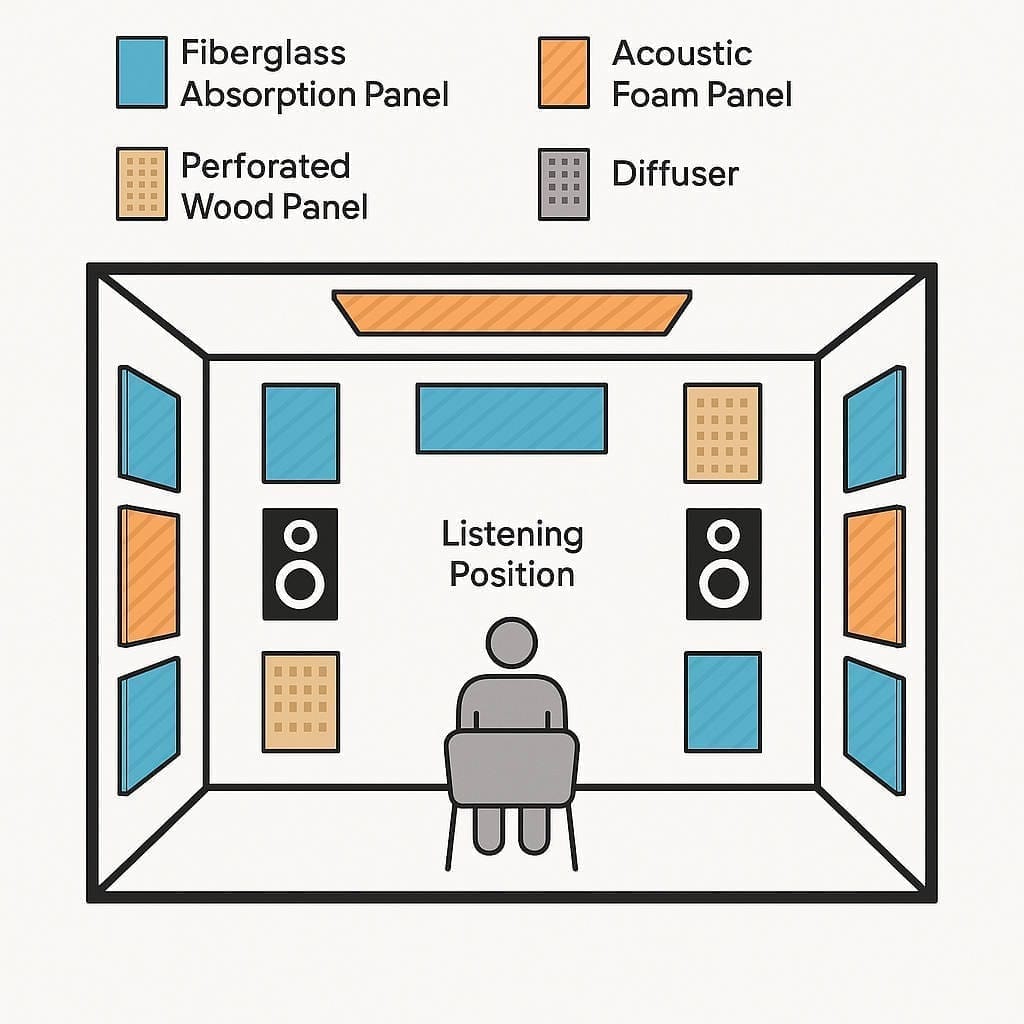
If you’ve ever stepped into a recording studio, a home theater, or even a well-designed office and thought, “Wow… it sounds so clear in here” — you’ve experienced the magic of acoustic treatment.
While good speakers and microphones matter, the room itself plays a huge role in sound quality. Without treatment, even the best equipment can sound muddy, echoey, or downright unpleasant.
And when it comes to acoustic treatment, wall panels are the go-to solution. They’re effective, often stylish, and can completely transform the sound of your space without requiring a full renovation.
In this in-depth guide, we’ll explore:
- Why wall panels are essential
- The top 5 wall panels for different needs and budgets
- How to choose the right type for your room
- Where to place them for maximum results
- Tips to avoid common mistakes
By the end, you’ll know exactly what to buy, where to put it, and how to create a space that sounds as good as it looks.
Why Acoustic Wall Panels Matter
Sound behaves a lot like light — it bounces off surfaces. In a room with bare walls, those reflections create problems:
- Echo and flutter — short, sharp echoes that make speech harder to understand
- Comb filtering — certain frequencies cancel each other, creating a hollow or “phasey” sound
- Reverberation — lingering sound that makes music and dialogue lose clarity
Carpet and curtains help a little, but they mostly absorb only high frequencies. The midrange and bass — the most important parts for music and voice — often remain messy.
That’s where acoustic wall panels come in. They work by absorbing or scattering sound energy, so what you hear is more accurate and pleasant.
Understanding the Three Main Acoustic Jobs
Before we dive into panel types, let’s quickly break down what acoustic treatments actually do:
- Absorption — Soaks up sound energy, especially in the mid-to-high range. Makes speech clearer and music cleaner.
- Diffusion — Scatters sound evenly, so no single reflection dominates. Keeps a room lively but controlled.
- Bass trapping — Targets low-frequency build-up that causes “boomy” or “muddy” sound.
Most wall panels are designed for absorption and diffusion. Bass trapping often requires thicker panels or special corner designs.
Top 5 Acoustic Wall Panels (2026 Edition)
I’ve picked these five based on performance, practicality, aesthetics, and value. Each serves a slightly different purpose — so depending on your space, you may use one type or a combination.
1. Fiberglass or Rockwool Fabric-Wrapped Panels
Best for: Professional studios, home theaters, podcast rooms, offices
These are the gold standard for acoustic absorption. They use a dense core made of rigid fiberglass (like Owens Corning 703) or mineral wool (rockwool), wrapped in an acoustically transparent fabric.
How they work:
Sound waves enter the panel, causing the dense fibers to vibrate slightly, converting sound energy into heat. The result is superb mid-to-high frequency absorption — and if thick enough, they can tackle lower mids too.
Typical specs:
- Thickness: 2–4 inches
- NRC: 0.8–1.05 (higher is better)
- Mounting: Z-clips, French cleats, or direct wall mounts
Pros:
- High performance, even in challenging rooms
- Long-lasting and durable
- Customizable fabrics and colors
- Works well in both small and large rooms
Cons:
- Thin panels won’t absorb bass effectively
- Handling fiberglass requires gloves and a mask during installation
- Can be pricier than foam for the same coverage
Pro tip: Leave a 2-inch air gap between the panel and wall for better low-mid absorption. Think of it like adding invisible thickness without extra cost.
2. Acoustic Foam Panels (Wedge, Pyramid, Egg-Crate)
Best for: Budget home studios, practice rooms, voice-over booths
These are the most recognizable acoustic panels — lightweight foam cut into wedge, pyramid, or egg-crate shapes.
How they work:
The foam absorbs high frequencies by forcing sound through a porous material that turns vibration into heat.
Typical specs:
- Thickness: 1–4 inches
- NRC: 0.3–0.8
- Mounting: Adhesive spray, double-sided tape, or Velcro
Pros:
- Affordable and easy to install
- Lightweight — sticks to walls without heavy mounts
- Comes in multiple shapes and colors
Cons:
- Minimal bass absorption
- Can degrade or crumble over time
- Cheaper foam may be flammable — always check fire ratings
Pro tip: Use foam only for taming highs and flutter echo. Combine with bass traps or thicker panels for a full-range solution.
3. Perforated or Slotted Wood Panels (with Absorptive Backing)
Best for: High-end spaces, home theaters, offices, restaurants
These panels combine design and function. The front is wood (with holes, slots, or patterns), backed by an absorptive layer like fiberglass or rockwool.
How they work:
The perforations let sound through to the backing material, where it’s absorbed. The wood face also diffuses some sound, keeping the room from feeling overly “dead.”
Typical specs:
- Face material: Hardwood veneer, MDF
- Back core: 1–2″ absorption material
- NRC: 0.6–0.95
Pros:
- Looks fantastic — great for visible areas
- Balances absorption and diffusion
- Strong and durable
Cons:
- More expensive than foam or basic fabric panels
- Requires precise installation for best performance
Pro tip: Leave a gap behind the backing material to improve low-frequency absorption. Even an extra inch makes a difference.
4. Acoustic Diffusers (QRD, Skyline, Poly)
Best for: Rear walls of studios, live rooms, larger home theaters
Diffusers are different — instead of absorbing sound, they scatter it. This maintains the room’s natural energy but reduces harsh reflections.
How they work:
By using different depths, angles, or shapes, diffusers spread sound waves in multiple directions. This avoids strong “slap-back” echoes and helps keep stereo imaging accurate.
Typical specs:
- Types: QRD (Quadratic Residue), Skyline (3D blocks), Poly (curved surfaces)
- Material: Wood, plastic, or high-density foam
Pros:
- Preserves room liveliness
- Improves spaciousness and clarity
- Visually striking
Cons:
- No absorption — can’t fix echo on its own
- Often bulky and expensive
Pro tip: Place diffusers on the rear wall or ceiling in listening rooms. Avoid putting them at first reflection points where absorption is more effective.
5. Fabric-Wrapped Hybrid & Acoustic Art Panels
Best for: Living rooms, creative offices, multipurpose rooms
These panels combine acoustic absorption with customizable aesthetics — sometimes incorporating printed designs, photographs, or patterns.
How they work:
A core of absorption material is wrapped with fabric (either plain or printed). Some hybrids also add shallow diffusion surfaces.
Typical specs:
- Thickness: 1–3 inches
- NRC: 0.5–0.9
Pros:
- Doubles as décor — blends seamlessly with interiors
- Can be made from your own artwork or photos
- Good mid/high absorption
Cons:
- Variable performance — some are more decorative than functional
- Can cost more per square foot than plain panels
Pro tip: Treat them just like normal absorbers — place at reflection points. They may be “pretty,” but their positioning should still be functional.
How to Choose the Right Panel Type
When deciding, ask yourself:
- What’s my main sound problem?
- Flutter echo → Foam or thin absorption panels
- Muddy mids → 2–4″ fiberglass or rockwool panels
- Boomy bass → Thick panels or bass traps
- What’s my room’s main purpose?
- Critical listening → Absorption + bass traps + some diffusion
- Home theater → Absorption at reflections, diffusion at the rear
- Office → Aesthetic hybrids or perforated panels
- How important is appearance?
- Functional only → Standard fabric or foam
- Visible/public space → Perforated wood or art panels
- What’s my budget?
- Entry-level: Foam + basic DIY fiberglass panels
- Mid-range: Commercial fabric-wrapped absorbers
- Premium: Custom wood hybrids and diffusers
Placement Guide for Maximum Effect
Getting the right panels is only half the battle. Placement can make or break the results.
Here’s a simplified cheat sheet:
- First reflection points: Side walls and ceiling spots where sound from speakers bounces directly to your ears. Use absorption here.
- Corners: Place bass traps or thick absorbers for low-end control.
- Rear wall: Use diffusion or absorption depending on how far it is from your listening position.
- Behind speakers: Absorption helps reduce boundary reflections.
- Even distribution: Spread panels around — don’t cluster them all in one spot.
DIY vs. Pre-Built Panels
DIY Panels
- Pros: Cost-effective, fully customizable, satisfying to make
- Cons: Time-consuming, requires basic carpentry skills, must handle materials safely
Pre-Built Panels
- Pros: Professional finish, tested performance, ready to mount
- Cons: Higher cost per panel
Rule of thumb: If looks and guaranteed specs matter — buy pre-built. If budget is tight and you’re handy — DIY can save 50% or more.
Cost Expectations (2026 Market)
| Panel Type | Price Range (per panel) |
|---|---|
| Foam Panels | $15–$60 |
| Fabric-Wrapped Fiberglass | $40–$150 |
| Perforated Wood | $120–$500+ |
| Diffusers | $100–$700 |
| Acoustic Art Panels | $100–$400 |
Common Mistakes to Avoid
- Over-relying on foam — Foam can’t fix bass problems.
- Ignoring corners — Bass traps are essential in most rooms.
- Over-deadening — Too much absorption makes rooms sound lifeless.
- Not checking fire ratings — Safety first, especially for foam.
- Random placement — Strategic positioning yields far better results.
Step-by-Step Acoustic Treatment Plan
- Tackle the bass first — Add corner traps or thick panels.
- Treat early reflections — Sidewalls, ceiling, behind monitors.
- Control the rear wall — Add diffusion or absorption.
- Fine-tune the sound — Fill in gaps with smaller absorbers or hybrids.
- Balance the aesthetics — Swap some absorbers for decorative options.
FAQ Section
Q: Will acoustic panels stop sound from leaving my room?
A: No — they treat sound inside the room. For soundproofing, you need isolation methods like mass-loaded vinyl, double walls, or sealing gaps.
Q: How many panels do I need?
A: Start with 20–30% coverage of your wall space and adjust after listening tests.
Q: Can I mix different types of panels?
A: Absolutely — mixing absorption, diffusion, and hybrid panels often gives the best results.
Final Thoughts
Acoustic wall panels are not just for recording studios anymore. Whether you’re streaming, watching movies, hosting meetings, or just enjoying music, the right panels can dramatically improve your listening experience.
From high-performance fiberglass panels to stylish wood hybrids and artistic absorbers, there’s a solution for every space and budget.
The key is knowing your room’s problems, choosing the right mix of panels, and placing them strategically. Do that, and you’ll enjoy not just better sound — but a more comfortable, inviting space to spend time in.