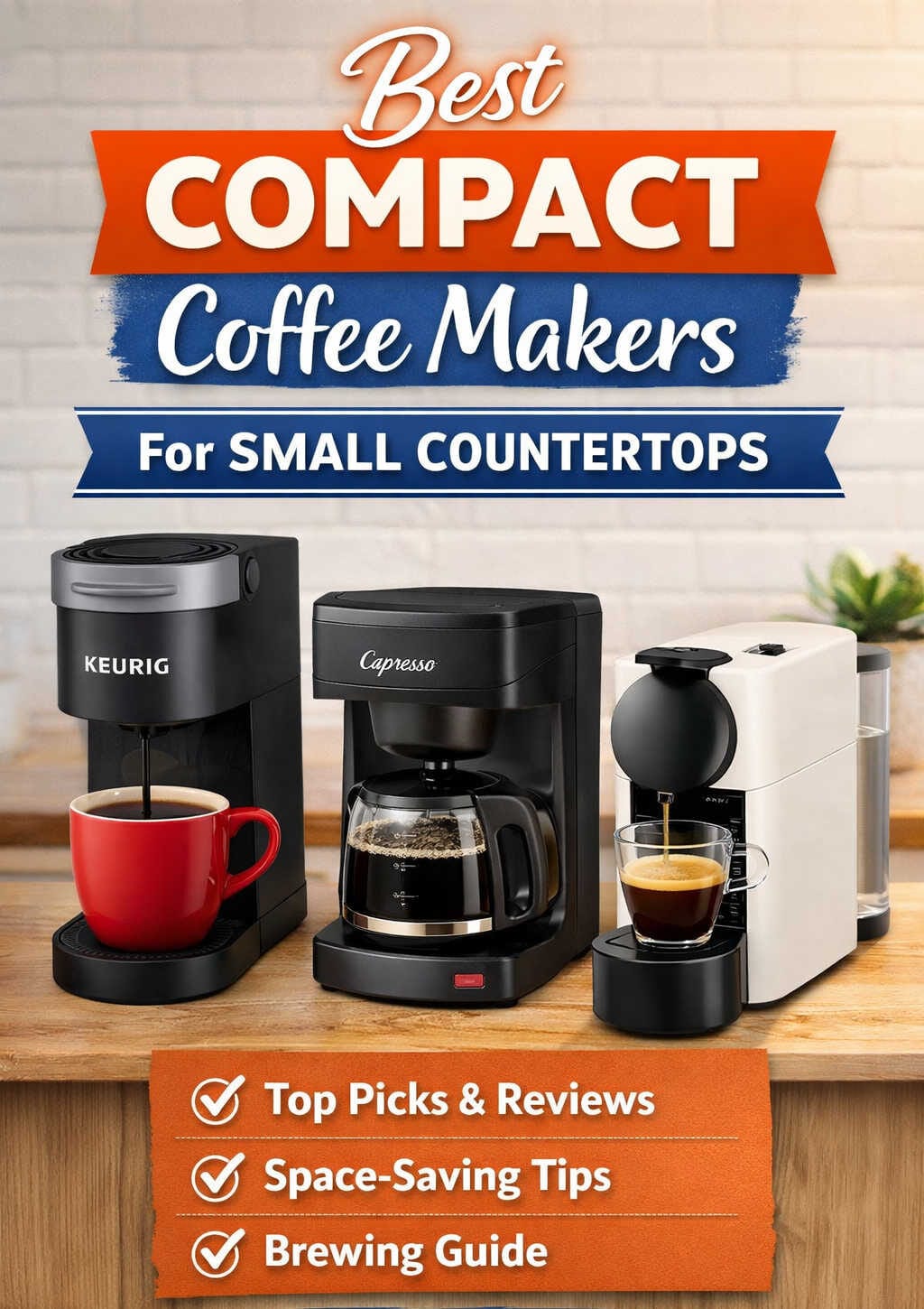
A good cup of coffee should never depend on how much kitchen space you have. Many people today live in apartments, dorm rooms, shared housing, or homes where countertop real estate is limited. Bulky appliances quickly create clutter, making everyday routines feel cramped and inefficient. Compact coffee makers solve this problem by delivering reliable brewing performance within a minimal footprint.
These machines are engineered for efficiency — they occupy less space, heat up quickly, and often streamline controls to make brewing effortless. Yet compact does not mean compromised. Many small coffee makers can produce excellent espresso, drip coffee, or specialty drinks comparable to full-size machines.
This guide explores how compact coffee makers work, what to look for before buying, and which models are worth considering right now. It’s written in a conversational, reader-focused style so you can confidently choose a machine that suits your lifestyle and space constraints.
Why Compact Coffee Makers Are Gaining Popularity
Kitchen design trends and lifestyle changes have made compact appliances more relevant than ever. Smaller living spaces demand smarter equipment. Remote work, solo living, and shared housing have also shifted coffee consumption habits toward single-cup brewing rather than large batch preparation.
A compact machine offers several practical advantages:
Efficient use of space
Slim machines can fit between appliances, under cabinets, or even on shelves. Some are narrow enough to store away when not in use.
Faster daily routines
Smaller heating systems typically reach brewing temperature quickly, helping you get coffee without delay.
Lower energy and water usage
Many compact machines use precisely measured water volumes and automatic shutoff functions, making them efficient for occasional use.
Simplified maintenance
With fewer components, cleaning and descaling are often straightforward.
Adaptability
Compact brewers suit students, travelers, office desks, or secondary kitchens just as well as main household setups.
When evaluating whether compact is right for you, consider how frequently you brew and how many people you serve. For individuals or couples, these machines often provide an ideal balance between convenience and performance.
Types of Compact Coffee Makers Explained
Compact coffee makers vary significantly in brewing method and functionality. Understanding each category helps you narrow your options before comparing specific products.
Pod-Based Single-Serve Machines
Pod systems emphasize convenience and consistency. They rely on pre-packaged capsules containing measured grounds, allowing users to brew with a single button press.
Benefits include:
- Minimal setup
- Predictable flavor results
- Wide variety of drink options
- Easy cleanup
These machines suit users who prioritize speed over customization. The main tradeoff is ongoing capsule cost and reduced control over extraction variables.
Compact Espresso Machines
Espresso machines compress brewing into smaller footprints by integrating pressurized pumps and thermoblock heating. They cater to enthusiasts seeking stronger flavor or milk-based beverages.
Advantages:
- Rich crema and aroma
- Café-style drinks at home
- Greater control over brewing
Challenges:
- Learning curve
- More involved cleaning
- Higher upfront investment
If espresso quality matters to you, this category is worth exploring despite slightly larger size.
Mini Drip Coffee Makers
Small drip brewers replicate traditional coffee preparation but scale capacity down to four or five cups. They appeal to those who prefer familiar methods and ground coffee flexibility.
Strengths:
- Affordable operation
- Ability to brew multiple servings
- Straightforward functionality
Weaknesses:
- Larger footprint than pod systems
- Slightly longer brewing time
Manual and Portable Brewing Devices
Manual brewers eliminate electrical components entirely. Though technically not machines, they remain among the most space-efficient solutions.
Examples include:
- Pressurized plunger brewers
- Compact stovetop brewers
- Travel-friendly devices
They reward users willing to invest a bit of effort for exceptional portability and flavor control.
Recommended Compact Coffee Makers
Below are well-known compact products across multiple categories to illustrate viable options. These represent different brewing philosophies rather than direct competitors.
Capsule Espresso Option
The Nespresso Essenza Mini Coffee Machine stands out for its extremely small footprint and rapid heat-up capability. Its slim design and lightweight construction allow it to fit almost anywhere, and it provides programmable espresso and lungo servings.
The Keurig K‑Mini Single Serve Coffee Maker represents another practical approach — focusing on straightforward single-cup brewing. It suits users who want versatility across beverage types with minimal setup.
Both machines illustrate how compact pod-based systems deliver convenience and consistency while occupying minimal counter space.
Small Drip Brewing Solutions
The Capresso 5‑Cup Mini Drip Coffee Maker provides traditional brewing functionality in a scaled-down body that suits small households.
The Mr. Coffee 5‑Cup Programmable Coffee Maker offers timer-based preparation and simple operation for budget-focused buyers wanting a classic coffee experience without large equipment.
Mini drip machines are especially useful if you dislike pods and prefer ground beans.
Portable Manual Choice
The AeroPress Original Coffee Maker demonstrates how manual brewing can deliver strong flavor with virtually zero footprint. It packs easily for travel and requires no electricity, making it a versatile backup or primary option in constrained spaces.
Compact Coffee Machine Innovation Trends
The small appliance segment evolves rapidly, and compact coffee makers benefit from ongoing innovation.
Recent releases show manufacturers prioritizing space efficiency without sacrificing capability. Some new compact machines focus on simplifying bean-to-cup brewing with integrated pumps and streamlined interfaces, designed specifically for apartments and smaller kitchens. Others aim to deliver espresso extraction with high-pressure pumps inside narrow frames suited to student accommodation or studio living.
The trend is clear: manufacturers recognize that size limitations should not limit coffee quality, and product development increasingly reflects that philosophy.
Real-World User Observations
Community discussions offer practical perspectives that technical specifications may overlook.
One enthusiast describing compact multi-format machines emphasized how valuable versatility is when space is limited, noting the ability to brew different pod types or grounds from a single unit.
Another user who frequently transports a small capsule machine between home and office praised its portability and consistent taste but mentioned restricted mug clearance due to compact height.
Other home brewers evaluating small drip machines highlighted the importance of programmable features and temperature stability even in budget models, suggesting that thoughtful feature selection matters more than size alone.
These user experiences underline an important takeaway: the best compact coffee maker isn’t defined solely by dimensions — usability and workflow integration are equally critical.
Choosing the Right Compact Coffee Maker
Selecting the ideal machine involves analyzing several technical and lifestyle factors.
Countertop Geometry
Measure width, depth, and vertical clearance. Don’t forget space required for opening lids or inserting pods.
Brewing Volume
Single drinkers benefit from capsule systems. Small households might prefer mini drip machines.
Flavor Preference
Espresso fans should prioritize pressure-based machines, while casual coffee drinkers may favor drip simplicity.
Operating Cost
Capsules increase long-term expense. Ground coffee machines reduce ongoing cost.
Cleaning Complexity
Removable reservoirs, accessible trays, and dishwasher-safe parts improve long-term convenience.
Mobility Needs
Travelers or students may prioritize lightweight manual or compact electric units.
Practical Placement Tips for Small Kitchens
Even the most compact machine benefits from thoughtful placement.
- Use vertical storage shelving
- Place machines near power sources
- Store pods or filters beneath cabinets
- Consider sliding trays for accessibility
- Avoid blocking ventilation
Strategic placement improves workflow efficiency and maintains a clean visual layout.
Maintenance and Longevity Strategies
To keep compact machines functioning optimally:
- Descale periodically
- Clean removable components regularly
- Use filtered water when possible
- Follow manufacturer instructions
Preventive maintenance reduces performance degradation and prolongs equipment lifespan.
Sustainability Considerations
Environmental impact is increasingly relevant in appliance selection.
Reusable filters and recyclable capsules represent meaningful improvements. Some capsule systems incorporate recycled materials or encourage recycling programs, while manual brewers minimize resource consumption altogether.
Selecting the right brewing approach can align with sustainability priorities without sacrificing convenience.
Final Perspective
Compact coffee makers demonstrate how intelligent engineering can reconcile spatial constraints with daily comfort rituals. They empower users to enjoy freshly brewed coffee regardless of living arrangements, proving that thoughtful design often matters more than sheer appliance size.
Whether you choose capsule convenience, espresso precision, drip familiarity, or manual portability, the ideal compact machine is one that integrates seamlessly into your routine. Evaluate space, consumption habits, flavor expectations, and operating cost carefully before deciding.
Coffee preparation should enhance your environment — not overwhelm it. With the right compact brewer, even the smallest countertop can support a satisfying and efficient coffee experience.