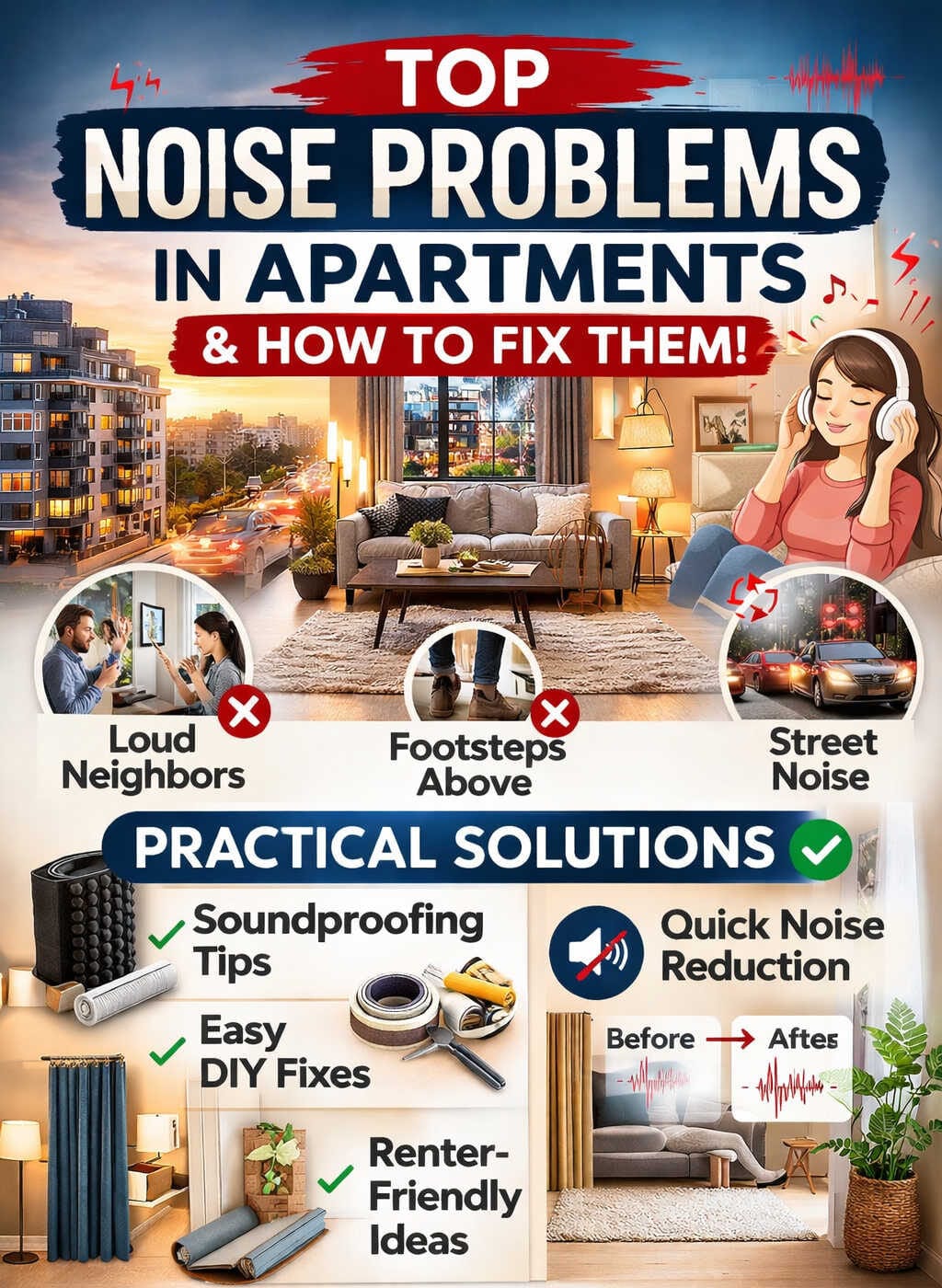
Apartment living offers convenience, accessibility, and a sense of community — but it also comes with a common challenge that many residents struggle with: unwanted noise. Whether it’s footsteps from above, loud conversations next door, or traffic rumbling outside your window, excessive sound can disrupt sleep, productivity, and overall well-being.
Noise in shared housing isn’t just irritating — over time it can increase stress levels and make your home feel less relaxing. The good news is that most apartment noise issues can be managed effectively once you understand their source and apply the right solutions. This guide explores the most common noise problems residents face and practical strategies you can implement to make your living space quieter and more comfortable.
Why Noise Problems Are Common in Apartments
Apartments are built around shared walls, ceilings, and floors, meaning sound travels easily between units. Unlike standalone houses, structural materials and design limitations can allow vibrations and airborne sound waves to pass through surfaces.
Several factors contribute to noise transmission:
- Thin or poorly insulated walls
- Hard flooring that reflects sound
- Structural vibrations through ceilings and floors
- Gaps around doors and windows
- High urban density outside the building
Understanding how sound moves through your environment helps you choose solutions that address the root of the problem rather than simply masking it.
Neighbor Noise: Conversations, Music, and Daily Activity
The Challenge
Noise from neighboring units is one of the most frequent complaints among apartment residents. Loud voices, television audio, music, or social gatherings can travel through walls, especially when sound insulation is limited.
These disturbances often occur at unpredictable times, making them particularly frustrating.
Practical Solutions
Add Sound-Absorbing Materials
Soft furnishings reduce sound reflections and dampen incoming noise. Consider:
- Thick area rugs or carpets
- Fabric wall hangings
- Upholstered furniture
- Cushions and throws
These additions don’t eliminate sound entirely but can significantly reduce how noticeable it feels.
Rearrange Furniture Strategically
Position large items like bookcases or wardrobes against shared walls. Dense furniture adds an extra barrier that helps absorb vibrations and reduce sound transfer.
Communicate Respectfully
Sometimes the simplest approach is conversation. If noise becomes persistent, politely discussing the issue with neighbors often leads to mutually agreeable adjustments.
Use Sound Masking
Background noise — such as a fan or white noise machine — can make sudden sounds less noticeable, helping maintain focus or sleep.
Footsteps and Impact Noise from Above
The Challenge
Hearing footsteps, dragging furniture, or dropped objects from the unit above is common in multi-story buildings. Unlike airborne sound, these noises travel through structural vibrations, making them harder to block.
Practical Solutions
Install Ceiling Treatments
If allowed, adding acoustic panels or a suspended ceiling layer can reduce vibration transmission. This option may involve higher effort but offers measurable results.
Encourage Upper-Floor Softening
If you have a good relationship with upstairs neighbors, suggest using rugs or padded underlays. Even partial floor coverage can greatly reduce impact noise.
Reduce Room Echo
While they don’t stop vibration entirely, acoustic panels inside your space reduce overall noise intensity and improve comfort.
Street and Outdoor Noise
The Challenge
Apartments located near busy roads, commercial areas, or construction zones often suffer from external sound intrusion. Honking, engines, and urban activity can disrupt sleep and concentration.
Practical Solutions
Hang Heavy Curtains
Dense curtains act as sound buffers by absorbing external noise. Layered fabrics or thermal curtains provide even better results.
Seal Entry Points
Small gaps around windows and doors can let in surprising amounts of sound. Weatherstripping or removable sealant is inexpensive and easy to apply.
Improve Window Barriers
Window inserts or thicker glazing significantly reduce outside noise penetration. While more costly, they are among the most effective long-term solutions.
Rearrange Sleep Areas
Moving your bed or workspace away from windows can lessen exposure to external disturbances.
Echo and Reverberation Inside the Apartment
The Challenge
Sometimes the problem isn’t external noise — it’s the way sound behaves inside your home. Sparse rooms with hard surfaces amplify echoes and make ordinary sounds seem louder.
Practical Solutions
Introduce Textures and Soft Surfaces
Adding softness to your interior reduces sound reflection. Examples include:
- Rugs
- Curtains
- Fabric furniture
- Indoor plants
These changes improve both acoustics and visual warmth.
Use Decorative Acoustic Panels
Modern acoustic panels come in attractive designs that blend with décor while improving sound control.
Cover Large Floor Areas
Strategically placing rugs in open areas prevents sound bouncing and makes rooms feel calmer.
Noise Through Doors, Windows, and Structural Gaps
The Challenge
Sound often slips through openings rather than walls. Door frames, vents, and window edges are common transmission points.
Practical Solutions
Seal Gaps
Applying weatherstrips or draft blockers reduces both noise and airflow.
Install Door Sweeps
These inexpensive additions block hallway noise from entering beneath doors.
Upgrade Door Density
Heavier doors provide better sound insulation if replacement is possible.
Noise from Below or Adjacent Units
The Challenge
Sound doesn’t only come from above — music, appliances, or footsteps from lower or adjacent units may also travel through the building.
Practical Solutions
Layer Flooring
Use dense rugs combined with padding underneath to dampen vibrations.
Consider Sound Barriers
Temporary soundproofing materials placed against walls can reduce transmission without permanent modification.
Rearrange Activity Zones
Positioning entertainment areas away from shared walls helps minimize disturbances.
Lifestyle and Psychological Factors
The Challenge
Noise perception varies between individuals. Some residents are more sensitive to certain frequencies or patterns, and stress levels can influence how sound is experienced.
Practical Solutions
- Maintain consistent sleep routines
- Use calming background audio
- Evaluate apartment locations carefully before renting
- Understand building noise policies
Being proactive about environment selection often prevents future frustration.
Budget-Friendly Noise Reduction Ideas
If renovations aren’t possible, affordable options still make a difference:
- Thick blankets used as temporary curtains
- Door draft stoppers
- Multi-layer rugs
- Rearranging furniture layout
These adjustments are renter-friendly and require minimal investment.
A Step-by-Step Strategy for Managing Apartment Noise
To approach noise control effectively:
- Identify where the noise originates
- Determine how it enters your space
- Apply targeted solutions
- Combine multiple methods for best results
Noise management works best as a layered process rather than relying on one single fix.
Creating a More Peaceful Living Environment
Complete silence is unrealistic in shared housing, but meaningful improvement is achievable. By combining communication, interior adjustments, and structural mitigation, you can significantly enhance comfort and tranquility.
Treat your apartment not just as a shelter, but as an acoustic environment you can shape. Small changes — softening surfaces, sealing gaps, rearranging layouts — collectively transform how sound behaves in your home.
Ultimately, noise management is about balance: understanding limitations, implementing practical solutions, and maintaining realistic expectations. With thoughtful planning and experimentation, your apartment can become a far more peaceful place to relax, work, and recharge.