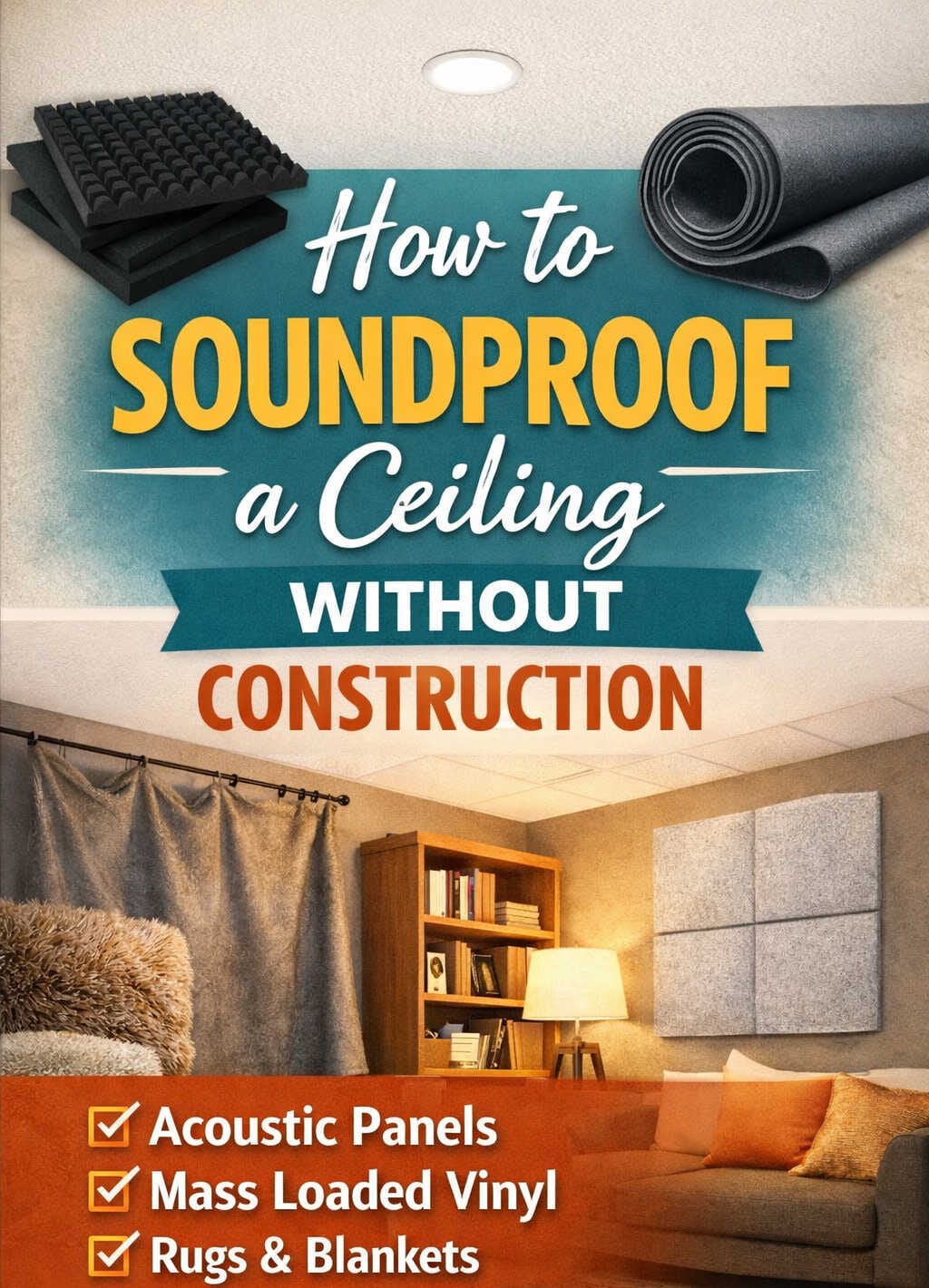
Living with constant noise from the ceiling can quickly turn a comfortable home into a stressful environment. Whether it’s footsteps from upstairs neighbors, music drifting through the floor, or the thud of moving furniture, unwanted sound affects sleep, focus, and overall well-being. For many people, especially renters or those working with limited budgets, structural renovation simply isn’t an option.
The good news is that you don’t need demolition tools or construction crews to make a noticeable improvement. While complete sound isolation requires structural changes, there are effective non-construction strategies that reduce noise and improve acoustic comfort significantly.
This guide walks you through practical, accessible methods to soundproof a ceiling without construction. You’ll learn how sound travels, what materials actually help, how to combine techniques for better results, and which products are worth considering.
Understanding Ceiling Noise and Why It’s Hard to Stop
Before jumping into solutions, it helps to understand what you’re dealing with. Sound behaves differently depending on how it’s created.
Airborne Noise
This includes voices, TV audio, music, or general household sounds. These sounds travel through air and vibrate structural surfaces, passing into your space.
Impact Noise
Footsteps, jumping, dropped objects, or furniture movement create vibration that travels through building structure. This type of noise is harder to reduce because it bypasses air pathways entirely.
Most homes experience both forms at once. That’s why single solutions rarely work well — effective noise control usually requires combining approaches.
What You Can Realistically Expect
It’s important to be upfront: non-construction methods won’t make your room completely silent. True soundproofing requires structural isolation techniques that involve rebuilding surfaces.
However, the right combination of materials can:
- Reduce perceived loudness
- Soften harsh sound reflections
- Improve sleep quality
- Make your space more comfortable
- Limit distraction during work or study
Think of the goal as reducing disturbance rather than eliminating sound entirely.
Choosing a Strategy That Fits Your Situation
When addressing ceiling noise without construction, focus on four core acoustic principles:
- Absorption — soaking up sound energy
- Mass — blocking sound transmission
- Sealing — closing sound leakage paths
- Dampening — reducing vibration effects
The following sections explain how to apply each principle in practical ways.
Install Acoustic Panels for Immediate Improvement
Acoustic panels are among the easiest and most effective starting points for ceiling treatment.
These panels are designed to absorb sound waves rather than reflect them back into the room. This reduces echo and softens the intensity of incoming noise.
Why They Work Well
Sound waves enter the porous material and lose energy through friction. The result is reduced reverberation and a calmer acoustic environment.
Easy Installation Options
Many panels are designed for non-permanent mounting:
- Adhesive backing
- Hook-and-loop strips
- Lightweight mounting brackets
You can install them without drilling or structural modification.
Recommended Acoustic Panel Brands
For reliable performance and visual appeal:
- ATS Acoustic Panels — known for professional-grade absorption
- Audimute Absorption Sheets — renter-friendly and flexible
- TroyStudio Decorative Tiles — balance of aesthetics and function
Placement Tips
- Focus on central ceiling zones
- Cover areas above work or sleep spaces
- Maintain even spacing for consistent coverage
This approach maximizes acoustic benefit without overwhelming the room visually.
Add Acoustic Foam for Supplemental Absorption
Foam panels are popular because they’re affordable and easy to handle. They don’t block sound from entering the room, but they do improve overall acoustics.
Benefits
- Lightweight and easy to mount
- Decorative texture options
- Effective at reducing mid- and high-frequency reflections
Limitations
Foam alone won’t stop noise transmission. It works best when paired with denser materials.
Recommended Foam Products
- Auralex Studiofoam — widely trusted in audio environments
- Foamily Pyramid Foam Panels — good value and coverage
- Mybecca Wedge Foam — practical entry-level option
Mixing shapes and patterns improves sound diffusion and visual appeal.
Hang Acoustic Blankets or Dense Fabric Layers
Textile solutions offer a flexible and visually customizable way to reduce noise.
Heavy fabrics absorb sound energy and add a buffer between your room and the ceiling.
Installation Ideas
- Suspend blankets from adhesive ceiling hooks
- Use curtain track systems
- Create decorative fabric canopies
Recommended Products
- Audimute Sound Absorption Blankets
- Sure-Max Heavy Moving Blankets
- Thick velvet or wool curtains
Layering materials increases effectiveness while enhancing room warmth and style.
Block Noise Using Mass-Loaded Vinyl
If your primary goal is reducing incoming noise rather than improving room acoustics, adding mass is essential. Mass-loaded vinyl (MLV) is one of the most effective options that doesn’t require construction.
Why This Material Stands Out
- Dense composition blocks sound transmission
- Flexible installation options
- Works across multiple frequency ranges
Installation Methods
- Hang using strong adhesive hooks
- Attach to lightweight rails
- Combine with decorative coverings
Recommended MLV Products
- TMS Mass Loaded Vinyl
- Soundsulate Barrier Rolls
- Acoustiblok Soundproof Sheets
Combining vinyl barriers with absorption materials creates a more comprehensive solution.
Seal Small Openings That Let Sound Leak Through
Tiny gaps often undermine otherwise effective treatments. Sound easily travels through:
- Fixture edges
- Vent openings
- Ceiling seams
- Cable entry points
Applying acoustic sealant helps close these pathways.
Recommended Sealants
This inexpensive step often yields noticeable improvement.
Reduce Reflection with Rugs and Floor Treatments
Treating the floor helps control how sound behaves within your room. Hard flooring reflects sound upward, amplifying perception.
Better Alternatives
- Thick area rugs
- High-density rug pads
- Layered textile coverage
Suggested Products
Soft surfaces absorb energy and reduce interaction with the ceiling.
Use Furniture to Your Advantage
Strategic layout changes can enhance acoustic control without spending money.
Helpful Adjustments
- Position tall bookshelves beneath noise sources
- Add upholstered furniture in central zones
- Place storage units along shared boundaries
Furniture adds mass and diffusion surfaces that reduce sound intensity.
Try Lightweight Ceiling Tile Systems
Temporary ceiling tiles add an extra acoustic layer between you and external noise.
Advantages
- Improved absorption
- Simple installation kits
- Decorative options available
Recommended Products
These systems combine functionality with visual upgrades.
Mask Remaining Noise with Sound Conditioning
When physical reduction reaches its limits, masking techniques help psychologically reduce disturbance.
Effective Methods
- White noise machines
- Ambient audio apps
- Smart speaker sound loops
Recommended Devices
- LectroFan White Noise Machine
- Marpac Dohm Classic
- Adaptive smartphone sound apps
These solutions smooth out sound contrasts and improve sleep conditions.
DIY Options for Budget-Conscious Solutions
If commercial products aren’t accessible, alternatives include:
- Layered cardboard structures
- Egg carton diffusers
- Mounted quilts or blankets
These methods offer modest improvement but shouldn’t replace engineered materials where possible.
Creating a Layered Noise Reduction Plan
The most effective setups combine multiple techniques.
Example Implementation
- Seal gaps and openings
- Install acoustic panels
- Add vinyl barrier layer
- Hang fabric or foam treatments
- Optimize furniture and flooring
Layering addresses different sound pathways simultaneously.
Selecting Materials Based on Noise Type
For Voices or Music
Focus on:
- Panels
- Foam
- Blankets
- Vinyl barriers
For Footsteps or Impact
Prioritize:
- Vinyl barriers
- Rugs
- Ceiling tiles
- Furniture mass
Matching solutions to noise sources improves efficiency.
Budget-Friendly Upgrade Planning
You don’t need to implement everything at once.
Starter Level
Foam panels, blankets, sealant
Mid-Level
Acoustic panels, rugs, layout optimization
Advanced Non-Construction Setup
Vinyl barriers, ceiling tiles, layered absorption
Gradual upgrades spread cost while improving performance.
Maintaining Your Acoustic Improvements
Keep materials effective by:
- Dusting panels regularly
- Checking adhesive mounts
- Replacing worn textiles
- Inspecting sealants annually
Maintenance protects long-term performance.
Final Thoughts on Soundproofing a Ceiling Without Construction
Reducing ceiling noise without structural renovation requires understanding sound behavior and applying practical, layered solutions. While total sound isolation isn’t achievable without construction, combining absorption, mass, sealing, and layout optimization can dramatically improve comfort.
The key is approaching the problem methodically. Start with accessible improvements, evaluate results, and expand gradually. Over time, these enhancements transform your space into a quieter, more relaxing environment suitable for rest, work, and everyday living.