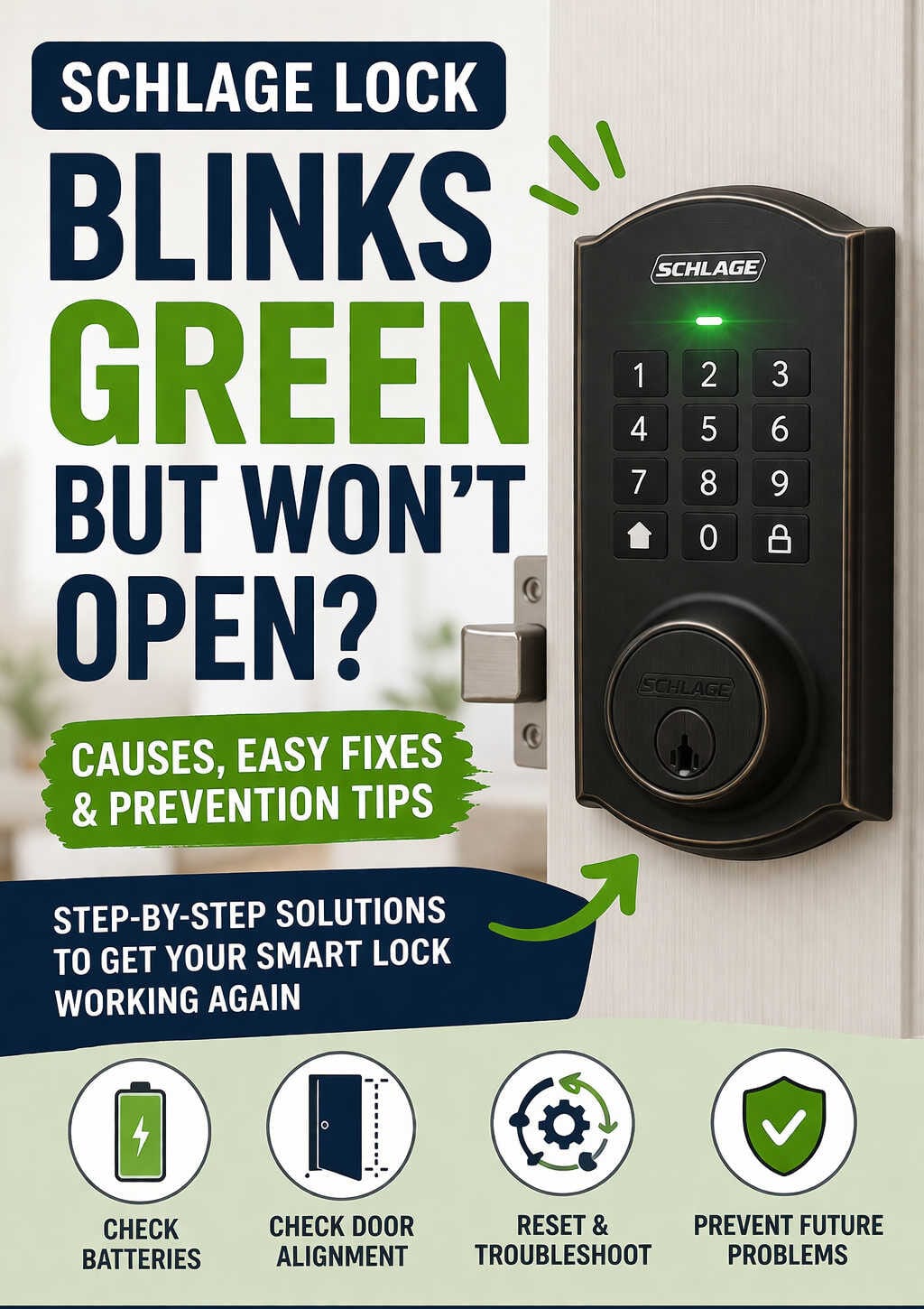
A Schlage smart lock is built to provide convenience, security, and quick access to your home. But when it blinks green and still refuses to open, it can be confusing and frustrating.
The green light usually means your code or command is correct. So if the door isn’t unlocking, something is interrupting the mechanical action—not the digital verification. This guide explains exactly why that happens and how to fix it step by step.
What a Green Blinking Light Actually Means
When your Schlage lock flashes green, it’s confirming:
- Your PIN or command is valid
- The system recognizes authorized access
- The lock should disengage immediately
If it doesn’t unlock, the issue lies in one of these areas:
- Power delivery (battery strength)
- Internal mechanical components
- Installation or alignment
- Software or system glitches
Think of it like this: the lock “understands” you, but can’t physically respond.
Common Reasons Your Schlage Lock Won’t Open
Weak or Dying Batteries
This is the most overlooked cause.
Even when the keypad lights up, the motor may not be getting enough power to move the deadbolt. Electronic components need less energy than mechanical ones, so the light can work while the unlocking mechanism fails.
Typical signs:
- Green light appears normal
- No sound or weak motor movement
- Lock works intermittently
Door or Deadbolt Misalignment
If the deadbolt doesn’t align properly with the strike plate, the motor struggles to retract it.
This often happens when:
- The door frame shifts over time
- The strike plate is slightly off
- The door is being pushed or pulled
Quick test:
Open the door and try unlocking again. If it works when open, alignment is the issue.
Incorrect Installation
If your lock was recently installed or reassembled, internal parts like the cam or tailpiece might be misaligned.
Symptoms include:
- Green light flashes
- Lock makes a noise but doesn’t move
- Thumb turn feels loose or stuck
Internal Dirt or Friction
Dust, debris, or lack of lubrication can increase resistance inside the lock.
Over time, this makes it harder for the motor to turn the mechanism—even if everything else is working properly.
Mechanical Wear and Tear
Like any hardware, internal components can wear out.
Possible issues:
- Broken springs
- Worn gears
- Disconnected internal parts
This is more common in older locks or heavily used doors.
Software or System Glitches
Smart locks occasionally experience bugs or temporary malfunctions.
This can cause:
- Commands to register (green light)
- But no mechanical response
A reset often resolves this.
Step-by-Step Fixes You Should Try
Follow these in order to avoid unnecessary effort.
1. Replace the Batteries First
Start simple—it solves a large percentage of cases.
What to do:
- Replace all batteries with fresh, high-quality ones
- Avoid mixing old and new batteries
- Use alkaline or lithium for best results
2. Test the Lock with the Door Open
This helps isolate alignment problems.
Steps:
- Open the door
- Enter your code
- Watch the deadbolt
Results:
- Works → alignment issue
- Doesn’t work → internal problem
3. Check Door Alignment
If alignment is the issue:
- Tighten loose hinges
- Adjust the strike plate position
- Ensure the deadbolt slides smoothly
Even slight misalignment can stop the lock from working.
4. Perform a Quick Reset
Sometimes the system just needs a refresh.
Steps:
- Remove batteries
- Wait about 15 seconds
- Reinsert them
This clears temporary glitches.
5. Factory Reset the Lock
If the issue persists, reset everything.
Important: This erases all codes.
General process:
- Remove batteries
- Hold the reset button
- Reinsert batteries while holding
- Release after reset signal
6. Clean the Internal Mechanism
If your lock has been in use for a long time:
- Open the interior housing
- Remove dust and debris
- Apply light lubrication to moving parts
Avoid over-lubricating—it can attract more dirt.
7. Reinstall the Lock Properly
If installation is the root cause:
- Remove the lock
- Re-align the internal components
- Ensure the tailpiece is correctly positioned
Take your time—precision matters here.
8. Inspect for Damaged Parts
If nothing works, check for:
- Broken springs
- Worn gears
- Loose internal connections
At this stage, repair or replacement may be necessary.
Recommended Tools and Products for Fixing the Issue
Having the right tools can make troubleshooting much easier.
Battery Recommendations:
- High-quality alkaline batteries (for consistent power)
- Lithium batteries (longer lifespan, better performance in extreme temperatures)
Maintenance Tools:
- Precision screwdriver set
- Graphite or silicone-based lubricant (avoid oil-based products)
- Cleaning brush or compressed air
When You Should Consider Replacing the Lock
Sometimes fixing the issue isn’t worth the effort.
Consider replacement if:
- The lock is more than 4–5 years old
- Internal components are damaged
- The problem keeps returning
- Repair costs approach replacement cost
A new lock can save time and provide better reliability.
Preventing This Problem in the Future
Replace Batteries Regularly
Don’t wait for failure. Change them every 6–12 months.
Keep the Lock Clean
Dust and debris can silently cause performance issues over time.
Ensure Proper Door Alignment
Check periodically, especially if your door sticks or shifts.
Avoid Slamming the Door
Repeated impact can damage internal components.
Perform Occasional Maintenance
A quick inspection once or twice a year can prevent bigger issues.
Frequently Asked Questions (FAQs)
Why does my Schlage lock blink green but not unlock?
It means the code is correct, but the lock cannot physically open due to battery issues, misalignment, or mechanical problems.
Can low batteries cause this problem even if the keypad works?
Yes. The keypad uses less power than the motor, so the light can function while the unlocking mechanism fails.
How do I know if it’s an alignment issue?
Test the lock with the door open. If it works normally, the problem is with door or strike plate alignment.
Will a factory reset fix the issue?
It can fix software-related problems, but it won’t help if the issue is mechanical or due to misalignment.
Is it safe to open the lock and fix it myself?
Yes, for basic cleaning and inspection. But if internal parts are broken, professional repair or replacement is safer.
How long do Schlage locks typically last?
Most last 5–10 years depending on usage, maintenance, and environmental conditions.
Final Takeaway
If your Schlage lock blinks green but won’t open, the issue is rarely as serious as it seems.
Start with the basics:
- Replace batteries
- Check alignment
- Reset the system
In most cases, one of these steps will resolve the problem quickly. If not, deeper mechanical inspection or replacement may be required.