Smart thermostats are no longer luxury gadgets. In 2026, they have become one of the most practical upgrades for homeowners who care about energy efficiency, comfort, and long-term cost savings. Rising energy prices, stricter environmental standards, and smarter home ecosystems mean that choosing the right thermostat matters more than ever.
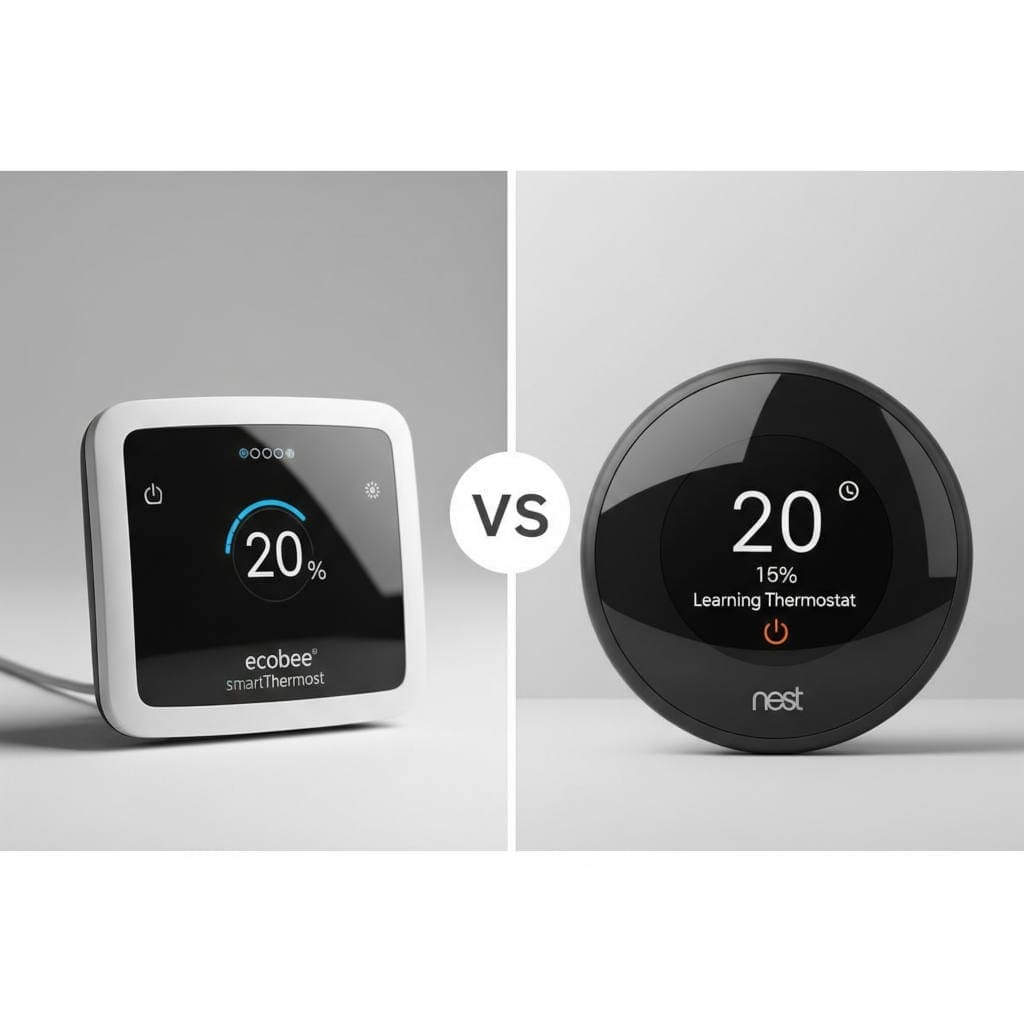
Among all the options available today, two names continue to dominate the conversation: Ecobee and Nest. Both brands promise lower utility bills, smarter automation, and better control over your home’s climate. But they achieve those goals in very different ways.
This in-depth guide will help you decide which thermostat suits your energy efficiency needs in 2026. We’ll break down how each system works, how they save energy, how comfortable they really are, and which type of homeowner benefits most from each option.
Why Choosing the Right Smart Thermostat Matters in 2026
Energy efficiency is no longer just about saving money—it’s about future-proofing your home. Governments and utility providers are increasingly rewarding efficient households, while inefficient systems cost more to operate every year.
A modern smart thermostat can:
- Reduce heating and cooling costs by optimizing runtime
- Adapt to your daily habits automatically
- Improve comfort in different rooms
- Provide insights into energy usage
- Integrate with broader smart home systems
However, not all smart thermostats deliver these benefits in the same way. The difference between Ecobee and Nest is not about which is “better,” but which aligns best with how you live.
Understanding the Core Philosophy: Ecobee vs Nest
Before diving into features, it’s important to understand the mindset behind each brand.
Ecobee focuses on precision and control.
It assumes every home is different, and every room matters. Ecobee emphasizes sensors, customization, and data-driven decision-making.
Nest focuses on automation and simplicity.
It assumes most users want minimal involvement. Nest learns your habits and quietly adjusts the temperature without requiring constant input.
This philosophical difference affects everything—from energy savings to daily usability.
Energy Efficiency: How Each Thermostat Actually Saves Power
How Ecobee Optimizes Energy Usage
Ecobee’s approach to energy efficiency is based on real-time data from multiple locations inside your home. Instead of assuming one temperature reading represents the entire house, Ecobee relies on room sensors to make smarter decisions.
Key energy-saving mechanisms include:
- Detecting which rooms are occupied
- Ignoring empty rooms during heating or cooling
- Adjusting temperature dynamically based on real usage
- Providing detailed energy reports so users can fine-tune behavior
This method works exceptionally well in:
- Large homes
- Multi-story houses
- Homes with uneven temperature distribution
- Families with irregular schedules
Because Ecobee reacts to what’s actually happening inside the house, it often reduces wasted energy caused by heating or cooling unused spaces.
How Nest Learns to Save Energy Automatically
Nest takes a very different route. Instead of relying heavily on sensors, it builds an understanding of your routine over time.
Nest observes:
- When you wake up
- When you leave the house
- When you return
- When you go to sleep
Using this pattern, it automatically adjusts temperatures without requiring you to program schedules. Over time, it becomes increasingly accurate, often requiring little to no manual adjustment.
Nest’s efficiency shines in:
- Smaller homes
- Apartments
- Homes with consistent daily routines
- Users who prefer hands-off automation
While Nest may not always achieve the same level of room-specific optimization as Ecobee, it excels at reducing energy waste caused by forgetfulness or inconsistent manual settings.
Room Sensors and Temperature Balance
Ecobee’s Advantage with Smart Sensors
One of Ecobee’s strongest selling points is its SmartSensor ecosystem. These sensors measure both temperature and occupancy in different rooms.
What this means in practice:
- Bedrooms stay comfortable at night
- Living rooms get priority during active hours
- Empty rooms stop influencing temperature decisions
- Hot or cold spots are reduced significantly
This not only improves comfort but also prevents overworking your HVAC system, which translates into long-term energy savings and less wear on equipment.
Nest’s Sensor Strategy
Nest offers optional temperature sensors, but they are typically used in a more limited way. They primarily help prioritize temperature in one room at a specific time rather than actively managing multiple spaces throughout the day.
Nest relies more heavily on behavioral learning than spatial awareness. For some homes, that’s enough. For others—especially larger ones—it can be a limitation.
Comfort Experience: Which Thermostat Feels Better to Live With?
Energy efficiency means nothing if your home isn’t comfortable.
Living with Ecobee Day to Day
Ecobee gives users a sense of control. You know why your thermostat is doing what it’s doing because you can see sensor activity, schedules, and reports.
Comfort benefits include:
- Fewer temperature swings
- Better sleep comfort
- More consistent heating and cooling
- Less need to manually adjust settings
For people who enjoy understanding and optimizing their home environment, Ecobee feels empowering.
Living with Nest Day to Day
Nest feels effortless. After the initial learning phase, most users rarely touch it.
Comfort benefits include:
- Smooth temperature transitions
- Minimal micromanagement
- Quiet, background optimization
- Clean and simple interaction
For users who want technology to “just work,” Nest often feels more intuitive.
Smart Scheduling: Manual Control vs Machine Learning
Ecobee’s Scheduling Flexibility
Ecobee allows detailed scheduling, including:
- Different schedules for weekdays and weekends
- Temperature adjustments based on sensor activity
- Vacation and away modes
- Manual overrides with clear feedback
This approach works best for people who:
- Have complex schedules
- Work from home part-time
- Share a home with multiple occupants
- Want predictable comfort patterns
Nest’s Learning-First Approach
Nest minimizes scheduling effort. You can set a few preferences, but the system improves automatically as it observes behavior.
This is ideal for:
- Predictable routines
- Users who dislike programming devices
- Minimalist smart home setups
However, some users feel less control when the system makes decisions on their behalf.
Smart Home Integration and Ecosystem Compatibility
Ecobee’s Broad Compatibility
Ecobee is designed to work across multiple platforms:
- Voice assistants
- Smart lighting systems
- Home automation hubs
- Energy management programs
This flexibility makes Ecobee a strong choice for homes using mixed ecosystems or planning future expansions.
Nest’s Google-Centric Strength
Nest works exceptionally well within the Google ecosystem. If your home already uses Google smart displays, speakers, and routines, Nest integrates seamlessly.
However, outside that ecosystem, Nest can feel more limited compared to Ecobee’s broader compatibility.
App Experience and User Interface
Ecobee App: Data-Driven and Detailed
Ecobee’s app provides:
- Sensor activity
- Energy usage insights
- Runtime comparisons
- Weather impact analysis
While powerful, it may feel overwhelming to users who prefer simplicity.
Nest App: Clean and Minimal
Nest’s controls are integrated into a unified smart home app, emphasizing ease of use.
Strengths include:
- Simple navigation
- Quick adjustments
- Visual clarity
The trade-off is less detailed energy reporting.
Installation and HVAC Compatibility
Ease of Installation
Both thermostats are designed for DIY installation, but real-world experience varies.
Ecobee:
- Often includes additional hardware to support older systems
- Slightly more complex setup
- Higher success rate with unconventional wiring
Nest:
- Very beginner-friendly installation process
- Clean hardware design
- May struggle with certain older systems without modifications
Professional installation is recommended for complex HVAC systems regardless of brand.
Reliability, Updates, and Long-Term Value
Long-Term Outlook for Ecobee
Ecobee continues to expand its product lineup and improve software features. The brand has shown consistent commitment to:
- Backward compatibility
- Energy partnerships
- Ongoing updates
This makes Ecobee appealing for homeowners thinking long term.
Long-Term Outlook for Nest
Nest remains a strong product, but changes in product strategy have raised questions for some users regarding future availability and support in certain regions.
For users already embedded in Google’s ecosystem, this may not be an issue. For others, it’s a factor worth considering.
Cost Considerations and Value for Money
Upfront Cost vs Long-Term Savings
Ecobee often has:
- Slightly higher upfront cost
- Greater potential savings in larger homes
- More value from sensors over time
Nest often offers:
- Lower entry cost
- Faster setup
- Strong savings for simpler households
The best value depends on how much control and optimization your home actually needs.
Which Thermostat Is Best for Different Types of Homes?
Best Choice for Large Homes
Ecobee’s sensor-driven design provides superior comfort and efficiency.
Best Choice for Apartments and Small Homes
Nest’s learning automation works exceptionally well.
Best Choice for Families
Ecobee handles multiple occupants and varied schedules more effectively.
Best Choice for Minimalists
Nest delivers smart efficiency with minimal interaction.
Final Verdict: Ecobee vs Nest in 2026
There is no universal winner—only the right fit for your lifestyle and energy goals.
Choose Ecobee if you:
- Want maximum control over energy usage
- Live in a larger or multi-room home
- Care deeply about detailed energy insights
- Use multiple smart home platforms
Choose Nest if you:
- Prefer hands-off automation
- Have a predictable routine
- Live in a smaller home
- Are invested in a Google-based smart home
Both thermostats can significantly reduce energy consumption when used correctly. The real difference lies in how much control you want and how your home is structured.
In 2026, the smartest thermostat is not the one with the most features—but the one that fits your life seamlessly while quietly saving energy every day.