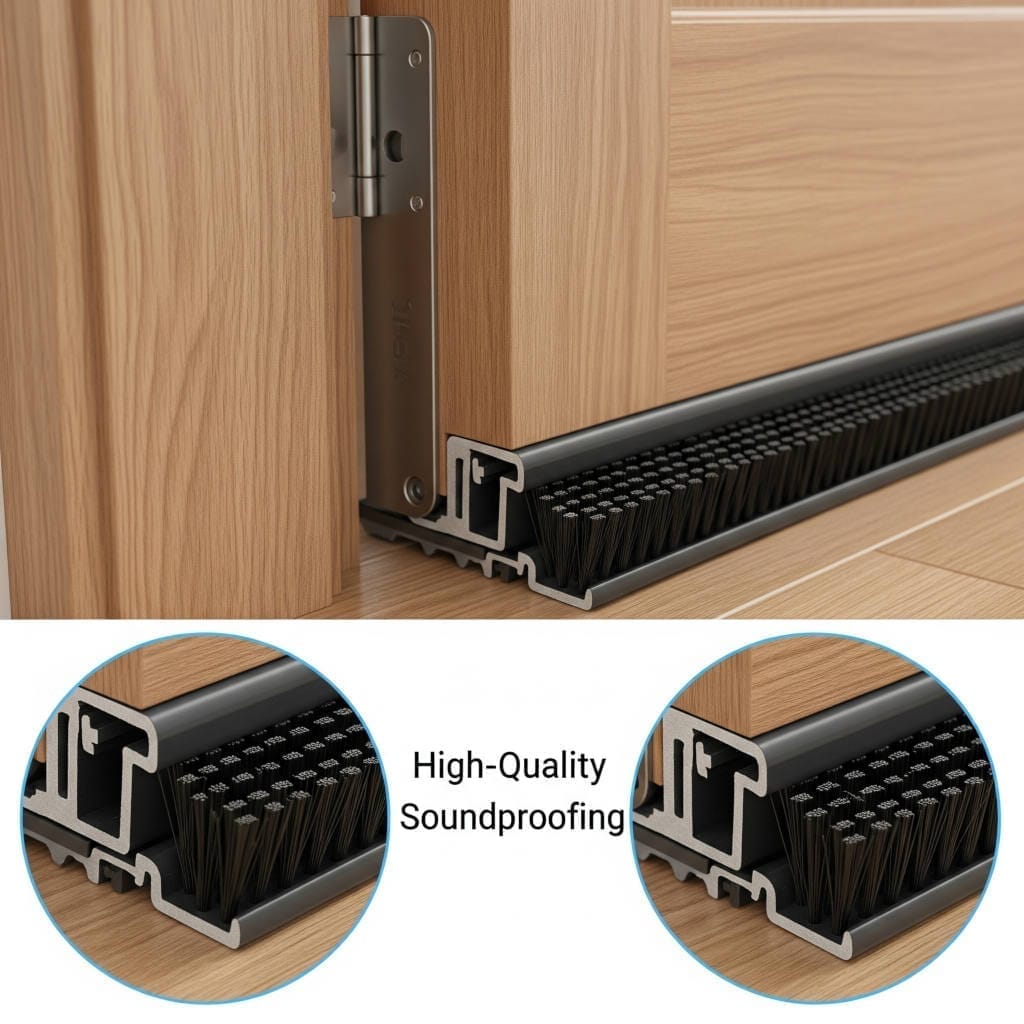
Have you ever wondered why you can still hear your neighbor’s TV through the wall, even after installing expensive soundproofing panels? The answer might be hiding right beneath your feet – literally. That innocent-looking gap under your door could be sabotaging your entire soundproofing effort.
I’ve spent years helping homeowners tackle noise problems, and I can tell you that door gaps are among the sneakiest culprits when it comes to unwanted sound transmission. The good news? Fixing this issue doesn’t require a construction degree or a massive budget. With the right door sweep or draft stopper, you can dramatically improve your room’s acoustic performance for less than the cost of a nice dinner out.
Why That Little Gap Under Your Door Is a Big Problem
Think of sound waves like water – they’ll find any opening, no matter how small, to slip through. That gap under your door isn’t just letting in drafts; it’s rolling out the red carpet for every noise in your house.
Here’s what’s really happening: when sound hits a barrier (like your door), it looks for the easiest escape route. Your solid wooden door might be doing a great job blocking noise, but if there’s a half-inch gap underneath, sound waves will squeeze through like they’re at a crowded subway turnstile.
Low-frequency sounds are particularly troublesome. That rumbling bass from your teenager’s music or the neighbor’s lawnmower? These deep sounds are masters at finding their way through small openings. Even a tiny gap can let through enough low-end noise to make your “soundproof” room feel anything but quiet.
Your Arsenal: Different Types of Door Sweeps and Draft Stoppers
The Classic Door Sweep: Your First Line of Defense
Traditional door sweeps attach directly to your door and create a seal when closed. They’re like having a bouncer at the bottom of your door, keeping unwanted noise from crashing your peaceful space.
Brush sweeps work well if you have uneven floors. The flexible bristles bend and conform to surface irregularities, though they’re better at stopping drafts than heavy-duty soundproofing. I’ve found they work great for light noise control in bedrooms or home offices.
Rubber and vinyl sweeps are where things get serious for soundproofing. These dense materials create a tight seal that blocks both air and sound effectively. They’re my go-to recommendation for most homeowners because they offer the best bang for your buck.
Metal-housed sweeps with rubber inserts combine durability with performance. The metal housing protects the rubber from wear while maintaining consistent floor contact. These are perfect for high-traffic doors that get opened and closed frequently.
Automatic Door Bottoms: The Premium Option
If you want to get fancy (and significantly more effective), automatic door bottoms are like the luxury cars of door sealing. These clever devices automatically drop down when you close the door and retract when you open it.
The magic happens through a spring-loaded mechanism that responds to door position. When closed, they create an excellent seal. When open, they lift up so you don’t drag them across your beautiful hardwood floors. Yes, they cost more – sometimes ten times as much as basic sweeps – but for critical applications like home theaters or recording spaces, they’re worth every penny.
Draft Stoppers: The Flexible Solution
Sometimes called “door snakes,” these are the Swiss Army knives of door sealing. They’re essentially fabric tubes filled with dense material that you place against the door gap. What makes them special is their versatility – you can use them on either side of the door, and they require zero installation.
The best ones are filled with materials like sand or small steel pellets that give them weight and density. Some even have magnetic strips for metal doors. They’re perfect for renters who can’t modify their doors or for anyone who wants a temporary soundproofing solution.
The Science Behind Effective Soundproofing Materials
Not all door sweep materials are created equal, and understanding why certain materials work better can help you make smarter choices.
Dense rubber compounds are the gold standard for acoustic applications. The heavier and denser the material, the better it blocks sound transmission. EPDM rubber is particularly effective because it maintains its flexibility while providing excellent sealing properties. When shopping, look for sweeps that feel substantial in your hand – weight usually correlates with better acoustic performance.
Neoprene brings weather resistance to the table, making it ideal for exterior doors. It stays flexible in extreme temperatures and won’t crack or become brittle over time. While it might cost a bit more, it’s an investment in long-term performance.
Vinyl options offer a middle ground between cost and effectiveness. Quality vinyl sweeps can provide significant noise reduction, especially when you’re working with a limited budget. They’re not as durable as rubber options, but they’ll get the job done for most residential applications.
For draft stoppers, the fill material matters enormously. Sand provides good density and conforms well to floor irregularities. Steel shot offers maximum weight for superior acoustic blocking but can be harder to handle. Recycled fabric is eco-friendly but generally less effective for serious soundproofing needs.
Getting Installation Right: The Details That Make or Break Success
Even the best door sweep won’t help if it’s installed incorrectly. I’ve seen expensive automatic door bottoms fail because someone skipped the preparation steps.
Start with your floor assessment. Walk around barefoot and check for bumps, dips, or uneven spots near the door. If your floor has significant irregularities, you might need to address these first or choose a more flexible sweep material that can conform to the surface.
Measure twice, cut once applies here too. Use a ruler to check the gap at multiple points along the door bottom. Floors and doors settle over time, so what looks even might not be. The ideal setup has your sweep just touching the floor with light pressure – not dragging heavily, but not leaving visible gaps either.
Consider your door’s swing pattern. Interior doors typically swing into rooms, while exterior doors usually swing inward. This affects which type of sweep will work best and how it should be positioned.
Think about your flooring type. Thick carpets need different solutions than hard surfaces. Some sweeps work better on tile, others on hardwood. If you have transition strips between rooms, make sure your chosen solution won’t catch or bind on these obstacles.
Real-World Product Recommendations That Actually Work
After testing dozens of products in various situations, here are my honest recommendations:
For Most Homeowners: The Sweet Spot Solutions
The M-D Building Products Door Sweep consistently delivers solid performance without breaking the bank. Its aluminum housing protects the vinyl insert while keeping costs reasonable. I’ve installed dozens of these, and they typically last 3-4 years with regular use.
For slightly more money, the Frost King Adjustable Door Sweep offers flexibility that pays off during installation. Its adjustable height mechanism lets you dial in the perfect seal, even if your measurements weren’t perfect initially.
For Serious Soundproofing: Professional-Grade Options
When clients need maximum noise reduction, I recommend the Zero International Automatic Door Bottom. Yes, it costs significantly more, but the acoustic improvement is immediately noticeable. These are built to commercial standards and will last for decades with proper maintenance.
The Pemko Door Sweep line offers various models designed specifically for acoustic applications. Their products come with actual STC (Sound Transmission Class) ratings, so you know exactly what level of noise reduction to expect.
For Renters and Temporary Solutions
The Twin Draft Guard remains my top pick for portable solutions. Its simple design works effectively, and you can throw it in the washing machine when it gets dirty. The weighted ends stay put without any installation required.
For a step up, magnetic draft stoppers work wonderfully on metal doors. They stay in position when you open the door and provide excellent sealing when closed.
What Kind of Improvement Can You Actually Expect?
Let’s set realistic expectations. A good door sweep won’t turn your regular door into a recording studio barrier, but the improvements can be substantial and immediately noticeable.
Most quality door sweeps provide 5-10 decibels of noise reduction across various frequencies. That might not sound like much, but remember that every 10-decibel reduction cuts the perceived loudness roughly in half. So even a 5-decibel improvement makes a room noticeably quieter.
The biggest improvements typically occur with low-frequency sounds – that rumbling bass, traffic noise, and HVAC systems. These deep sounds love to sneak through gaps, so sealing them up makes a dramatic difference.
Higher frequency sounds like conversation and footsteps also improve, though the effect varies more depending on your specific situation. The key is that door sweeps work best as part of a comprehensive approach, not as standalone solutions.
Keeping Your Investment Working: Maintenance That Matters
Door sweeps aren’t “install and forget” products. A little maintenance goes a long way toward preserving their effectiveness.
Monthly visual inspections take just a few seconds but catch problems early. Look for gaps, worn materials, or debris buildup. Seasonal changes can affect door fit, so check alignment after major temperature swings.
Clean your sweeps regularly. Dust and debris can prevent proper sealing. For brush sweeps, vacuum out accumulated lint and hair. Rubber sweeps just need occasional wiping with a damp cloth.
Know when to replace. Most door sweeps last 2-5 years depending on usage. Signs it’s time for replacement include visible wear, persistent gaps despite adjustments, or materials that have hardened or cracked.
Draft stoppers need different care – mainly keeping the fabric cover clean and checking that the fill material hasn’t shifted or leaked. Most fabric covers are machine washable, which makes maintenance easy.
The Money Side: Costs, Savings, and Value
Door sweeps and draft stoppers represent one of the most cost-effective soundproofing investments you can make. Basic draft stoppers start around $15-20, while professional automatic door bottoms can run $150-300. Most homeowners find excellent results in the $30-60 range.
The energy savings alone often justify the cost. The same gaps that let sound through also let conditioned air escape. I’ve seen utility bills drop by 5-10% after installing quality door seals throughout a house.
Beyond immediate savings, good acoustic control adds real value to your property. In our increasingly noisy world, buyers specifically look for homes with effective sound management. Quality door sealing is an inexpensive way to demonstrate attention to acoustic comfort.
Putting It All Together: Your Action Plan
Here’s how to approach your door soundproofing project:
Start with assessment. Walk through your home and identify the doors that matter most for noise control. Focus your budget on the doors that will provide the biggest impact – usually bedrooms, home offices, and spaces adjacent to noisy areas.
Choose the right tool for each job. You don’t need premium automatic door bottoms on every door. Save the expensive solutions for critical applications and use cost-effective sweeps elsewhere.
Install systematically. Do one door at a time and test the results before moving on. This lets you fine-tune your technique and ensures each installation is optimal.
Think comprehensively. Door sweeps work best when combined with weatherstripping around the door frame. Sealing the entire perimeter creates a much more effective acoustic barrier than just addressing the bottom gap.
Your Quieter Future Starts Now
Door sweeps and draft stoppers might seem like small components in the grand scheme of soundproofing, but they punch well above their weight class. For the cost of a nice dinner, you can dramatically improve the acoustic comfort of your most important spaces.
The key is matching the right solution to your specific needs, installing it properly, and maintaining it over time. Whether you’re trying to keep your home office quiet during video calls, ensure better sleep in a noisy neighborhood, or create a peaceful reading nook, effective door sealing is an essential first step.
Don’t let that innocent-looking gap under your door continue sabotaging your peace and quiet. With the right door sweep or draft stopper, you’re just one simple installation away from a noticeably quieter, more comfortable living space. Your ears (and your neighbors) will thank you.