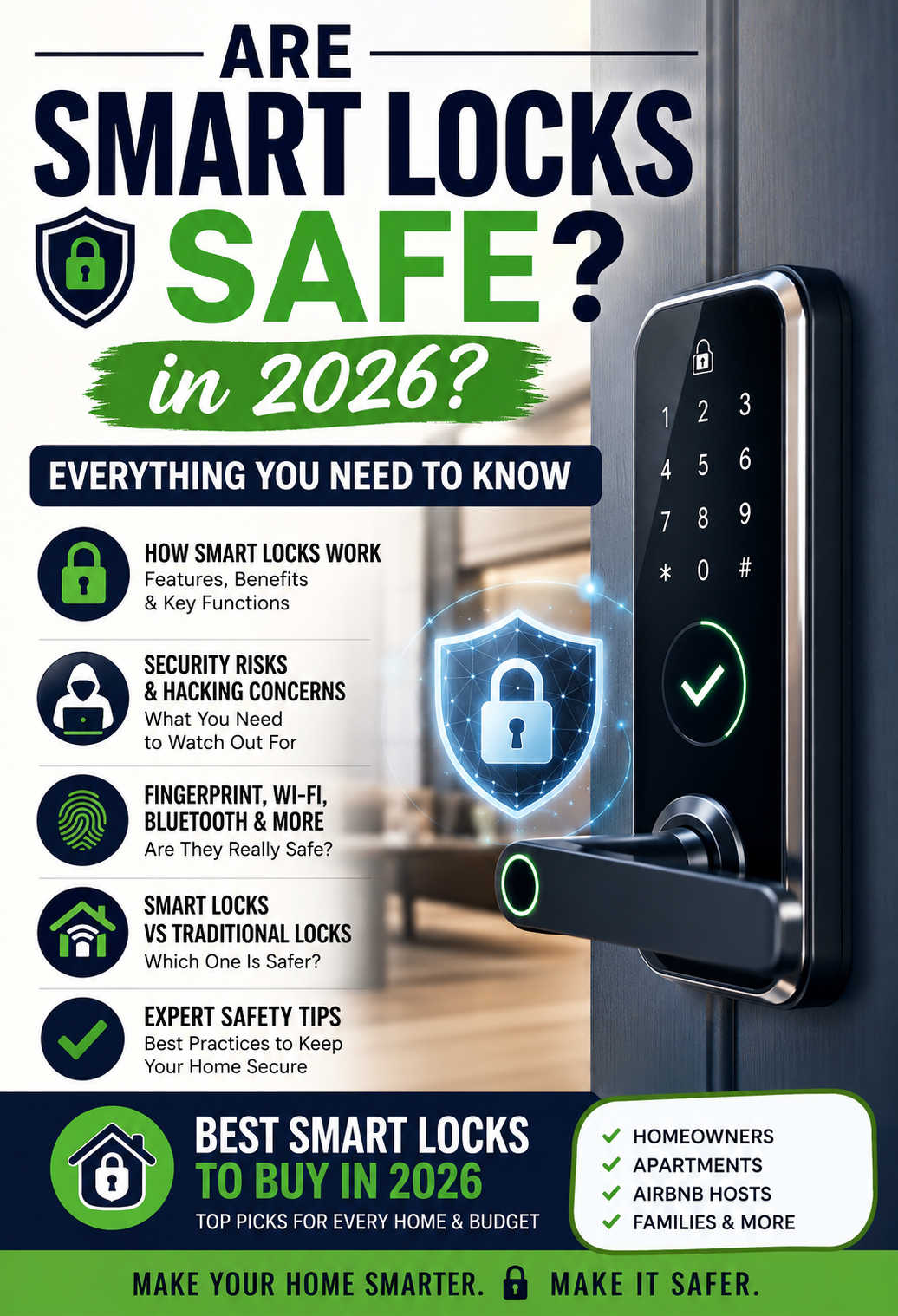
Home security has changed dramatically over the last few years. What once sounded futuristic is now part of everyday life. People unlock doors with fingerprints, phones, voice assistants, smartwatches, and even digital wallet apps. Smart locks are no longer niche gadgets for tech enthusiasts — they have become one of the fastest-growing upgrades for modern homes.
But as smart locks become more common, so do concerns about their safety.
Can smart locks be hacked? Are they safer than traditional deadbolts? What happens if the Wi-Fi goes down or the battery dies? And most importantly, should you trust a digital lock to protect your home and family?
These are valid questions. After all, your front door is one of the most important security barriers in your home.
The good news is that modern smart locks in 2026 are significantly more advanced, reliable, and secure than early generations. Many now use military-grade encryption, biometric authentication, local network protection, and advanced smart home security standards like Matter and Thread. At the same time, they still require proper setup and responsible use. A smart lock can improve your security, but only if you choose the right product and use it correctly.
This complete guide covers everything you need to know about smart lock safety in 2026, including how they work, their advantages and risks, whether hackers are a real threat, which features matter most, and which smart locks are actually worth buying.
What Is a Smart Lock?
A smart lock is an electronic locking system designed to replace or enhance a traditional door lock. Instead of depending only on a physical key, smart locks allow you to unlock your door using digital methods such as:
- A smartphone app
- Fingerprint recognition
- PIN codes
- Bluetooth
- Wi-Fi
- NFC cards
- Voice commands
- Smart home systems
- Facial recognition in some premium models
Some smart locks completely replace your existing deadbolt, while others fit over your current lock and operate it electronically from the inside.
In simple terms, a smart lock combines physical home security with digital access control.
Unlike regular locks, smart locks can do far more than simply open and close a door. They can send notifications when someone enters, automatically lock at certain times, generate temporary access codes for guests, and integrate with security cameras or alarm systems.
That combination of convenience and control is the main reason smart locks have exploded in popularity.
Why Smart Locks Became So Popular
Traditional locks have remained mostly unchanged for decades. While they still work well, they come with several frustrating limitations.
People lose keys. Spare keys get copied. Doors accidentally remain unlocked. Family members forget keys inside the house. Airbnb hosts constantly deal with guest check-ins. Parents worry about whether kids arrived home safely.
Smart locks solve many of these everyday problems.
Imagine leaving home and not having to wonder if you locked the door. Your phone instantly tells you. If you forgot, you can lock it remotely in seconds.
Or imagine a family member arriving home while you are away. Instead of hiding a spare key under a flowerpot, you simply create a temporary access code.
This convenience is a major reason homeowners are adopting smart locks at such a rapid pace.
Another important factor is smart home integration. In 2026, more homes are connected than ever before. Smart locks can now work together with:
- video doorbells
- security cameras
- smart lighting
- alarms
- motion sensors
- voice assistants
For example, unlocking your front door can automatically:
- disable your alarm system
- turn on hallway lights
- activate indoor climate settings
The result feels seamless and modern.
Are Smart Locks Actually Safe?
This is the question most people care about.
The honest answer is yes — most modern smart locks are safe when purchased from reputable brands and configured properly.
In fact, many security experts believe high-quality smart locks can be safer than traditional locks in several situations.
That may sound surprising at first, but traditional locks are far from perfect.
A regular lock can be:
- picked
- bumped
- copied
- forced open
- unlocked using stolen keys
Physical keys themselves create security risks. If someone copies your key, you may never know. If you lose it, replacing locks can become expensive and inconvenient.
Smart locks approach security differently. Instead of relying entirely on physical hardware, they use digital authentication systems and encrypted communication.
Many premium smart locks now include:
- encrypted wireless communication
- tamper alerts
- automatic locking
- biometric authentication
- access history logs
- temporary digital keys
- two-factor authentication
These features can dramatically reduce certain risks associated with traditional locks.
However, smart locks also introduce cybersecurity concerns that normal locks do not have. Because they connect to apps, wireless networks, or cloud systems, they can theoretically become targets for hacking attempts.
That is why choosing the right lock matters.
Can Smart Locks Be Hacked?
Technically, yes.
Any connected device can potentially be hacked. Smart locks are no exception.
But this is where context matters.
Movies and social media often exaggerate hacking risks, making it seem like criminals can instantly unlock any smart lock with a laptop. Real-world attacks are usually far more complicated.
Successfully hacking a smart lock typically requires:
- technical expertise
- specific vulnerabilities
- specialized tools
- close proximity in some cases
- poor security practices by the user
For most homeowners, the likelihood of a burglar physically breaking a window or forcing open a weak door is still much higher than a sophisticated smart lock hack.
Most criminals prefer fast and low-risk methods.
That said, vulnerabilities do exist, especially with:
- outdated firmware
- cheap off-brand devices
- weak passwords
- poorly secured home networks
This is why cybersecurity hygiene is extremely important.
The Biggest Smart Lock Security Risks
Understanding the real risks helps separate fear from reality.
Weak Passwords and Poor Account Security
One of the largest vulnerabilities is not the lock itself — it is the user.
If your smart lock account uses a weak password like:
- 123456
- password
- your birthday
then attackers may gain access without ever touching the lock physically.
Reusing passwords across multiple websites also increases risk dramatically.
If another service gets breached, hackers may try those same credentials on your smart home accounts.
This is why strong password management matters.
Using a password manager and enabling two-factor authentication instantly improves security.
Outdated Firmware
Smart locks are essentially small computers attached to your door.
Like phones and laptops, they occasionally receive software updates to fix:
- bugs
- vulnerabilities
- connectivity issues
- security flaws
Ignoring firmware updates can leave older vulnerabilities exposed.
Reputable smart lock companies release regular security patches. Cheap brands often do not.
That is one reason why buying from trusted manufacturers matters so much.
Weak Wi-Fi Security
Your smart lock is only as secure as the network connected to it.
If your Wi-Fi password is weak or your router uses outdated security protocols, your smart home devices become easier targets.
Modern routers should use:
- WPA3 encryption
- strong passwords
- updated firmware
Some advanced users even place smart devices on separate networks for additional protection.
Cheap Smart Locks
Not all smart locks are built equally.
Some low-cost products focus heavily on affordability while neglecting:
- encryption quality
- long-term software support
- secure app development
- physical durability
A poorly built smart lock may expose vulnerabilities that reputable brands would never allow.
This is why buying the cheapest available option is usually a bad idea when it comes to home security.
Are Smart Locks Safer Than Traditional Locks?
The answer depends on how you define safety.
Traditional locks are vulnerable mostly to physical attacks. Smart locks face both physical and digital threats.
But smart locks also provide advantages traditional locks cannot offer.
For example, if someone steals your physical key, they can potentially access your home without leaving evidence.
With a smart lock, you can instantly revoke digital access.
You can also monitor:
- who entered
- when they entered
- which code or method they used
Traditional locks provide none of this visibility.
Auto-locking is another major advantage. Many burglaries happen because homeowners accidentally leave doors unlocked. Smart locks reduce this risk significantly.
So while smart locks introduce digital concerns, they also solve many real-world security problems.
How Smart Locks Work
Most smart locks rely on electronic authentication systems.
Depending on the model, access may occur through:
- Bluetooth
- Wi-Fi
- Thread
- Z-Wave
- Zigbee
- NFC
- biometrics
When you send an unlock request through an app or fingerprint sensor, the lock verifies the credentials and activates an internal motor that turns the deadbolt.
Premium smart locks now use advanced encryption similar to what banks and secure online services use.
Many also include secure hardware chips that isolate sensitive authentication data from the rest of the system.
Bluetooth vs Wi-Fi Smart Locks
This is one of the most important buying decisions.
Bluetooth Smart Locks
Bluetooth locks connect directly to nearby devices like your smartphone.
They are generally:
- more energy efficient
- faster locally
- less dependent on the internet
Because Bluetooth locks do not constantly communicate with cloud servers, some users consider them safer.
However, remote access may require an additional hub.
Wi-Fi Smart Locks
Wi-Fi smart locks connect directly to the internet.
This allows:
- remote unlocking
- cloud synchronization
- instant notifications
- easier remote management
The downside is increased internet exposure and shorter battery life.
Modern Wi-Fi locks are still secure when configured properly, but they require stronger network security practices.
Matter and Thread: Why They Matter in 2026
If you are shopping for a smart lock in 2026, you will frequently see the terms Matter and Thread.
These technologies are becoming the new standard for smart homes.
Matter
Matter is a universal smart home standard designed to improve compatibility between brands and ecosystems.
Instead of dealing with confusing compatibility issues, Matter devices work more seamlessly together.
This improves:
- reliability
- device communication
- security consistency
Thread
Thread is a low-power mesh networking protocol designed specifically for smart home devices.
Compared to traditional Wi-Fi systems, Thread offers:
- lower power consumption
- faster response times
- better stability
- stronger mesh networking
Many experts consider Matter over Thread the future of smart home security.
What Happens If the Battery Dies?
This is one of the biggest concerns for first-time buyers.
Fortunately, smart lock manufacturers understand this concern very well.
Most smart locks include multiple backup options such as:
- physical key overrides
- emergency USB charging
- battery jump terminals
- low-battery alerts
Most devices provide warnings weeks before the battery fully drains.
Battery life varies depending on:
- usage frequency
- connection type
- weather conditions
- lock settings
Bluetooth and Thread locks generally last longer than Wi-Fi models.
Are Fingerprint Smart Locks Safe?
Biometric smart locks have improved tremendously over recent years.
Modern fingerprint systems now use:
- encrypted biometric storage
- anti-spoofing technology
- AI-assisted recognition
- secure local processing
Most premium models do not store actual fingerprint images. Instead, they store encrypted mathematical representations.
Fingerprint smart locks are generally considered secure and highly convenient.
However, lower-end sensors can sometimes struggle with:
- wet fingers
- dirty surfaces
- sensor wear over time
Premium biometric systems are far more reliable than older generations.
Best Smart Lock Features to Look for in 2026
Not all smart locks offer the same level of security.
When shopping, prioritize features that improve both physical and digital protection.
Strong Encryption
Look for locks using modern encryption standards.
Two-Factor Authentication
This adds an extra security layer to your account.
Auto-Locking
Automatically secures the door if you forget.
Activity Logs
Allows you to monitor entry history.
Temporary Guest Access
Perfect for visitors, cleaners, or deliveries.
Matter Compatibility
Improves long-term smart home compatibility.
Local Control
Reduces dependence on cloud systems.
ANSI/BHMA Ratings
These certifications evaluate physical lock durability and strength.
Best Smart Locks to Buy in 2026
Choosing the right smart lock depends on your priorities, budget, and smart home ecosystem.
Here are some of the strongest options currently available.
Schlage Encode Plus
The Schlage Encode Plus is widely considered one of the best premium smart locks available today.
It offers:
- excellent physical durability
- Apple Home Key support
- reliable Wi-Fi connectivity
- strong security reputation
It works especially well for Apple users looking for seamless integration.
The build quality feels substantial, and Schlage has a long-standing reputation in home security.
Yale Assure Lock 2
The Yale Assure Lock 2 balances modern features with strong reliability.
It supports:
- Matter compatibility
- multiple access methods
- sleek design options
- excellent ecosystem support
Its modular approach also allows buyers to choose between Bluetooth, Wi-Fi, or Matter setups.
August Wi-Fi Smart Lock
The August Wi-Fi Smart Lock remains one of the best options for renters.
Instead of replacing the entire deadbolt, it upgrades your existing lock from the inside.
That means:
- easier installation
- less visible exterior changes
- compatibility with existing keys
It is especially appealing for apartments.
Ultraloq U-Bolt Pro
This lock is popular among users who want multiple unlocking methods.
Features include:
- fingerprint access
- keypad entry
- smartphone unlocking
- physical key backup
It offers strong versatility at a more affordable price point.
Aqara Smart Lock U300
The Aqara U300 focuses heavily on Matter-over-Thread integration.
It is a forward-looking option for users building modern smart homes centered around:
- automation
- energy efficiency
- cross-platform compatibility
Are Smart Locks Worth Buying?
For many people, absolutely.
The convenience alone can dramatically improve daily life.
Not needing to carry keys, remotely controlling access, and receiving security notifications all add meaningful value.
Smart locks are particularly useful for:
- busy families
- Airbnb hosts
- elderly homeowners
- frequent travelers
- smart home enthusiasts
That said, they are not mandatory for good security.
A strong traditional deadbolt installed on a reinforced door remains highly effective.
The best choice depends on your lifestyle and comfort with technology.
Common Smart Lock Myths
“Smart Locks Stop Working Without Internet”
This is false.
Most smart locks continue working locally through:
- Bluetooth
- PIN codes
- fingerprint sensors
- physical keys
Only remote cloud features may stop temporarily.
“Hackers Can Instantly Unlock Smart Locks”
This is heavily exaggerated.
Most real-world attacks target weak passwords or outdated devices rather than advanced remote hacking.
“Traditional Locks Are Always Safer”
Traditional locks have vulnerabilities too.
Keys can be copied, locks can be picked, and doors can be forced open.
No lock system is perfect.
Smart Lock Security Tips
If you want the safest possible setup, follow these practices:
Use strong unique passwords for every smart home account.
Enable two-factor authentication whenever available.
Keep your firmware updated regularly.
Secure your home Wi-Fi with modern encryption.
Avoid extremely cheap off-brand smart locks.
Use smart locks alongside cameras, alarms, and reinforced doors.
Monitor access logs periodically.
Treat your smart lock like any other internet-connected device.
Frequently Asked Questions About Smart Locks
Are smart locks safe for apartments?
Yes. Smart locks work very well in apartments, especially retrofit models that do not require major installation changes. Many renters use them for easier roommate access and keyless convenience.
Can smart locks work during a power outage?
Yes. Most smart locks run on batteries rather than household electricity, so they continue functioning during blackouts.
What happens if my phone is lost?
Most smart locks still allow access through:
- backup PIN codes
- fingerprints
- physical keys
You can also revoke phone access remotely from another device.
Do smart locks increase home insurance costs?
In many cases, no. Some insurers may even offer discounts if smart locks are part of a broader monitored security system.
How long do smart lock batteries last?
Battery life depends on the lock type and usage. Most modern smart locks last several months to over a year before requiring replacement batteries.
Can someone hack my smart lock through Wi-Fi?
It is possible but uncommon with modern reputable locks using updated firmware and strong account security.
Are fingerprint smart locks better than keypad locks?
Fingerprint locks are often more convenient and harder to share or copy. However, keypad locks remain highly reliable and practical.
Which smart lock is best for Airbnb?
Many Airbnb hosts prefer:
- Schlage Encode Plus
- Yale Assure Lock 2
- August Wi-Fi Smart Lock
because they support temporary guest codes and remote access management.
Do smart locks require professional installation?
Not always. Many models are designed for DIY installation and can be installed using basic household tools.
Final Thoughts
Smart locks have evolved from experimental gadgets into mature home security devices.
In 2026, the best smart locks offer an impressive combination of:
- convenience
- security
- automation
- remote control
- smart home integration
While concerns about hacking are understandable, modern smart locks from reputable brands are generally very secure when configured properly.
The key is to approach them responsibly.
Choose a trusted brand. Use strong passwords. Keep firmware updated. Protect your Wi-Fi network. Combine smart locks with broader home security practices.
No lock is completely invulnerable — whether traditional or digital. But a well-designed smart lock can offer better visibility, better control, and better convenience than many conventional locking systems.
For homeowners who value both modern technology and practical security, smart locks are no longer just a luxury upgrade. They are quickly becoming a standard part of the modern connected home.